







Glass in Minecraft is a versatile and useful block, commonly used in construction as well as in more advanced decorative projects. While it doesn’t serve any significant mechanical function, its transparency and aesthetic appeal make it hard to imagine a well-designed base without at least a few glass elements.
Unlike many other materials, it doesn’t naturally occur in the game world – it must be crafted manually. Fortunately, the process is simple and accessible early in the game.
What can it be used for?
- Windows and skylights – allow natural light to pass through while keeping monsters out.
- Decoration – stained glass and panes can add elegance to any build.
- Aquariums and laboratories – perfect for underwater bases or modern interior designs.
- Redstone contraptions – while glass doesn’t conduct redstone signals, its transparency is useful in visible mechanisms.
- Aesthetic barriers – creates the illusion of open space while maintaining safety.
How to make Glass in Minecraft
Creating transparent blocks in Minecraft is very simple and available almost from the very beginning of the game. You only need two things to make them: sand and a furnace. Sand is easy to find, as it appears in large quantities on beaches, in deserts, and along rivers. Just collect a few blocks using a shovel, and you’re ready for the next step.
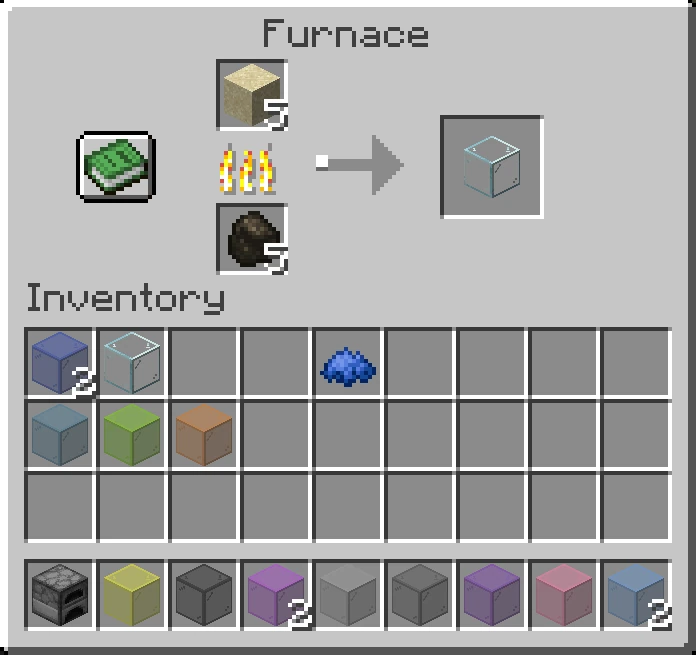
If you don’t have a furnace yet, you can craft one easily using eight pieces of cobblestone, arranged in a ring shape on the crafting table. Once your furnace is ready, place the sand in the top slot, and use coal, wood, or even a bucket of lava as fuel. After a short while, the smelting process will produce a transparent block, ready for use.
How to dye Glass in Minecraft
Once you’ve mastered the art of crafting transparent blocks, you can take things to the next level by adding color. In Minecraft, it’s possible to dye them in up to 16 different shades, allowing for truly unique and stylish builds.
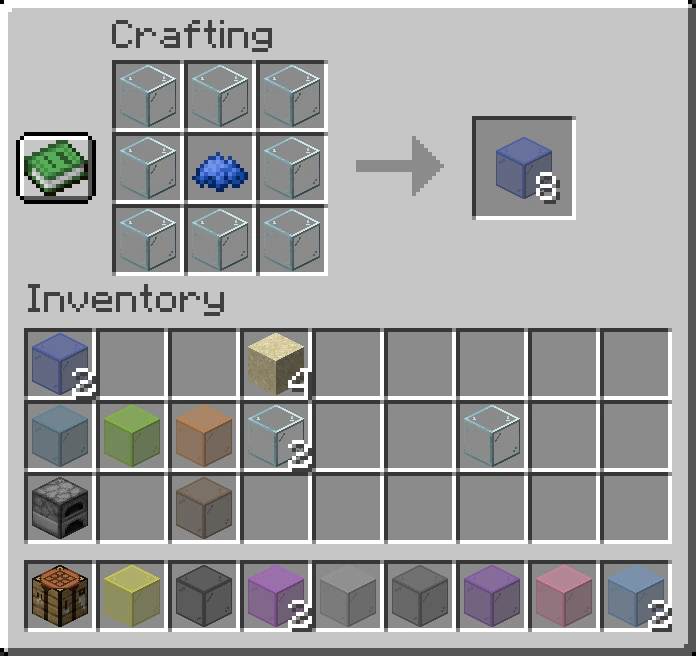
The process is very simple: you’ll need a dye, which can be obtained from various sources such as flowers, cacti, or fruits. Once you have your chosen color, combine it with eight clear blocks in a crafting table – just place the dye in the center slot and surround it with the other pieces.
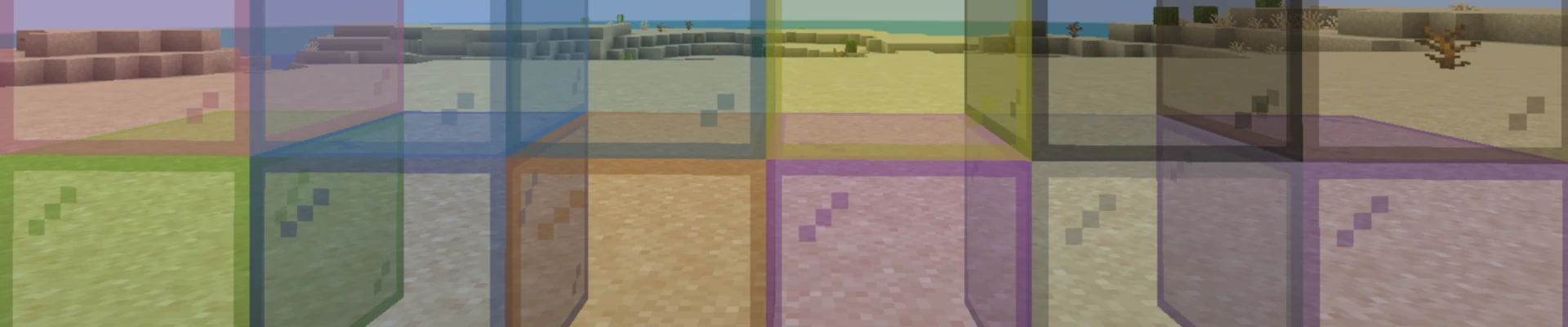
All basic colors are available: red, blue, green, yellow, black, and white. There are also more subtle tones like pink, purple, orange, light green, cyan, gray, light gray, lime, and brown. Each shade works great for creating spectacular stained glass windows, underwater tunnels, colorful skylights, or modern architectural elements.