









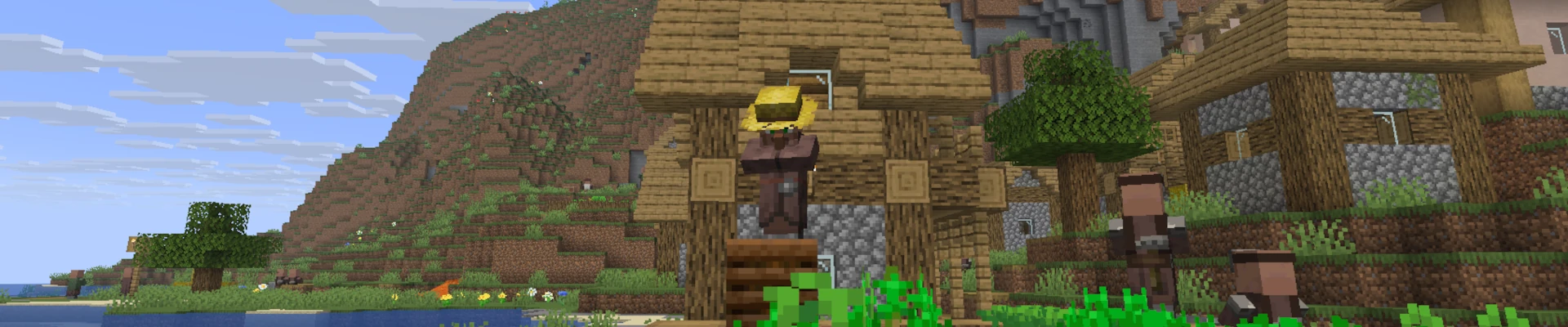
Villagers play a major role in the game because they allow trading, which makes it possible to obtain valuable items. Every villager in Minecraft can receive a profession if they find the appropriate job site block, and once assigned, they begin offering their own set of trades. All available villager jobs in Minecraft are: Armorer, Butcher, Cartographer, Cleric, Farmer, Fisherman, Fletcher, Leatherworker, Librarian, Mason, Shepherd, Toolsmith, Weaponsmith, as well as two special roles: Nitwit and Unemployed. In this guide, you will find a complete overview of all professions and their trades, helping you choose the perfect specialists for your village.
List of All Minecraft Villager Professions
Armorer
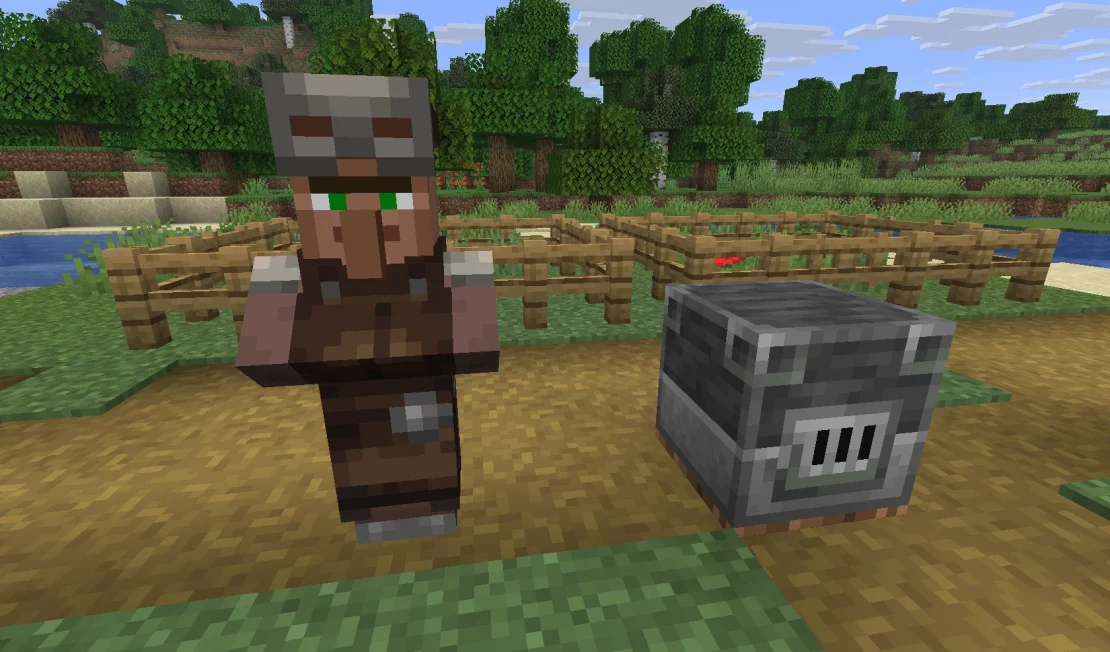
- Job Block: Blast Furnace
Armorer is a villager who specializes in trading armor pieces and plays an important role in the player’s progression. His job site block is the Blast Furnace, which allows him to unlock increasingly valuable items as he levels up. At lower levels he offers basic iron armor, but at higher tiers he can sell upgraded diamond pieces. This makes the Armorer one of the most useful specialists in a village, providing reliable access to strong protection without the need to gather rare resources or craft equipment from scratch.
Armorer Trades
Novice:
- Coal → Emerald
- Emerald → Iron Helmet / Iron Chestplate / Iron Leggings / Iron Boots
Apprentice:
- Iron Ingot → Emerald
- Emerald → Bell / Chainmail Leggings / Chainmail Boots
Journeyman:
- Lava Bucket → Emerald
- Diamond → Emerald
- Emerald → Chainmail Helmet / Chainmail Chestplate / Shield
Expert:
- Emerald → Enchanted Diamond Leggings / Enchanted Diamond Boots
Master:
- Emerald → Enchanted Diamond Helmet / Enchanted Diamond Chestplate
Butcher
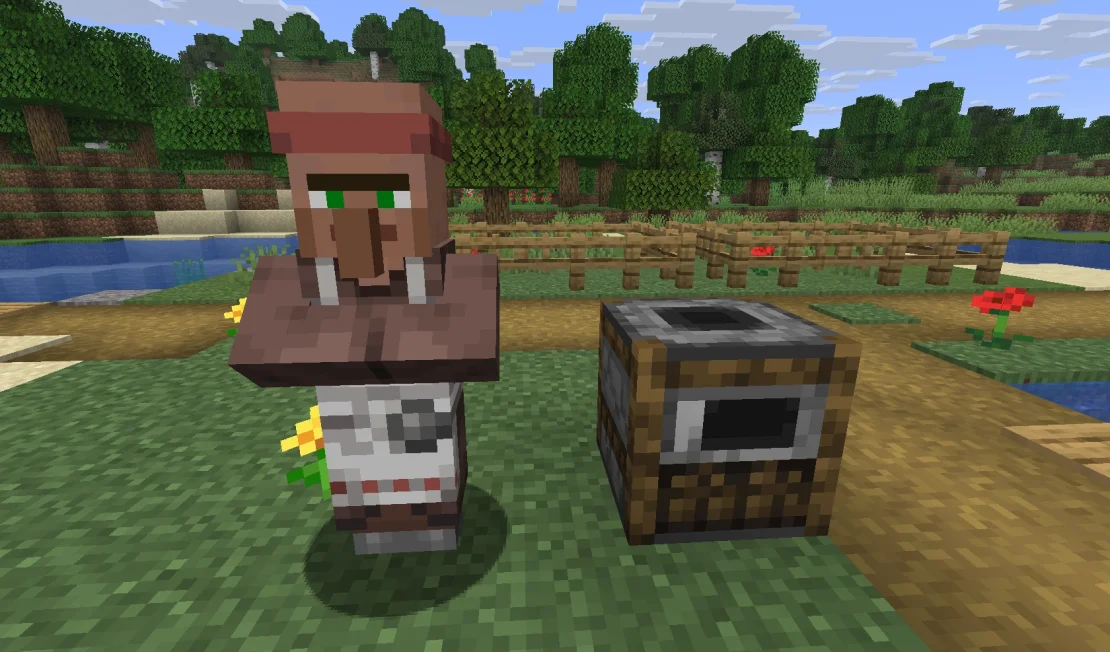
- Job Block: Smoker
Butcher specializes in trading various types of raw and cooked meat, making him especially useful for maintaining a steady food supply early in the game. Thanks to his trades, players can quickly restock essential food items without having to hunt or cook everything on their own. His job site block is the Smoker, which is used for fast food preparation. Players can cook meat in it much faster than in a regular furnace, making it a convenient tool for efficient survival.
Butcher Trades
Novice:
- Raw Chicken / Raw Porkchop / Raw Rabbit → Emerald
- Emerald → Rabbit Stew
Apprentice:
- Coal → Emerald
- Emerald → Cooked Porkchop / Cooked Chicken
Journeyman:
- Raw Mutton / Raw Beef → Emerald
Expert:
- Dried Kelp Block → Emerald
Master:
- Sweet Berries → Emerald
Cartographer
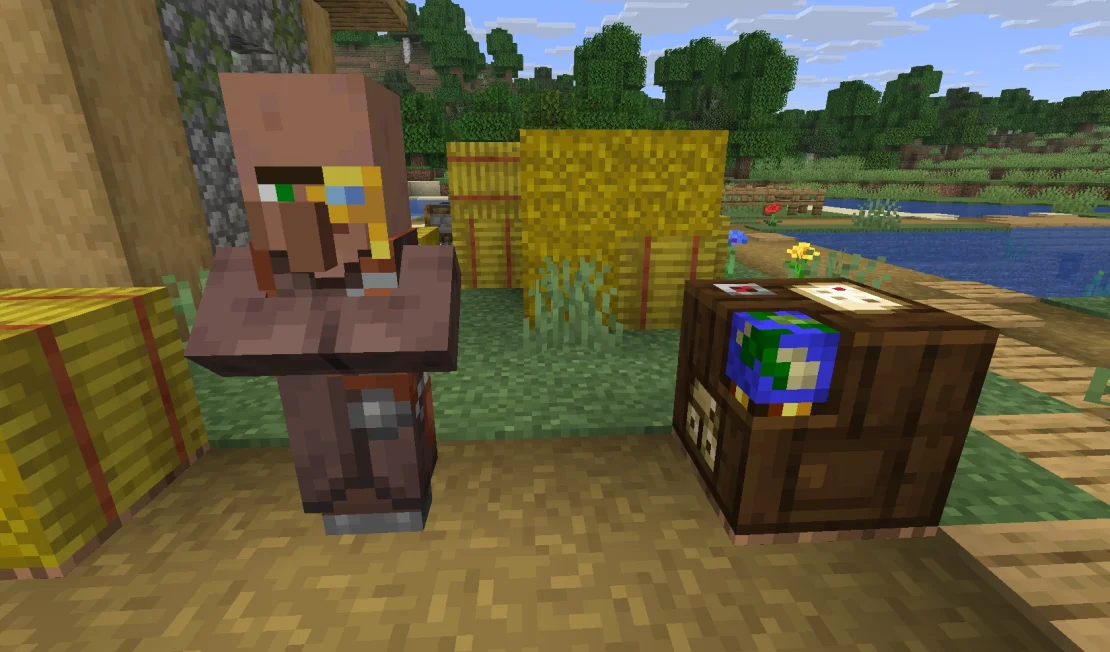
- Job Block: Cartography Table
Cartographer specializes in trading maps, making him one of the most useful villagers in the entire Minecraft world. Through his trades, players can obtain maps leading to rare structures such as Woodland Mansions, Ocean Monuments, and Trial Chambers, which greatly simplifies exploration without the need for wandering aimlessly. His job site block is the Cartography Table, where players can expand maps or clone them, both of which are essential tools during long exploration journeys.
Cartographer Trades
Novice:
- Paper → Emerald
- Emerald → Empty Map
Apprentice:
- Glass Pane → Emerald
- Emerald + Compass → Ocean Explorer Map
Journeyman:
- Emerald + Compass → Woodland Explorer Map / Trial Explorer Map
- Compass → Emerald
Expert:
- Emerald → Banner / Item Frame
Master:
- Emerald → Globe Banner Pattern
Cleric
- Job Block: Brewing Stand
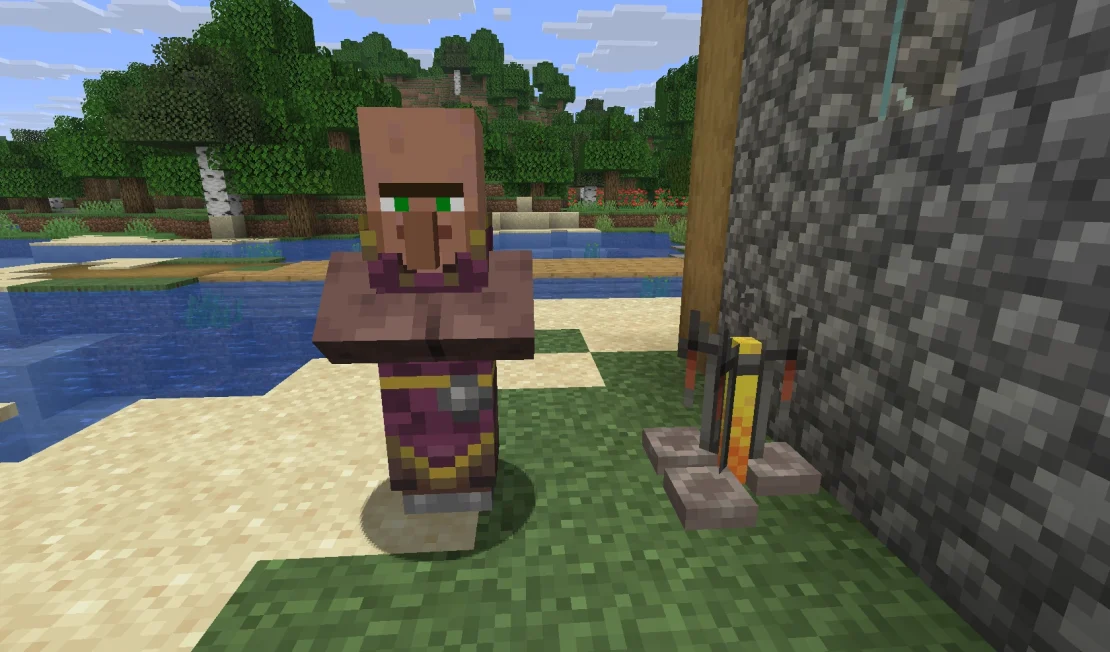
Cleric specializes in trading items related to magic and late-game progression, which makes him quite important when preparing for trips to the Nether or the End. His trades include useful resources such as glowstone, redstone, ender pearls, and Bottle o’ Enchanting, allowing players to obtain them without dangerous exploration. His job site block is the Brewing Stand, where players can brew a variety of potions.
Cleric Trades
Novice:
- Rotten Flesh → Emerald
- Emerald → Redstone Dust
Apprentice:
- Gold Ingot → Emerald
- Emerald → Lapis Lazuli
Journeyman:
- Rabbit’s Foot → Emerald
- Emerald → Glowstone
Expert:
- Scute / Glass Bottle → Emerald
- Emerald → Ender Pearl
Master:
- Nether Wart → Emerald
- Emerald → Bottle o’ Enchanting
Farmer
- Job Block: Composter
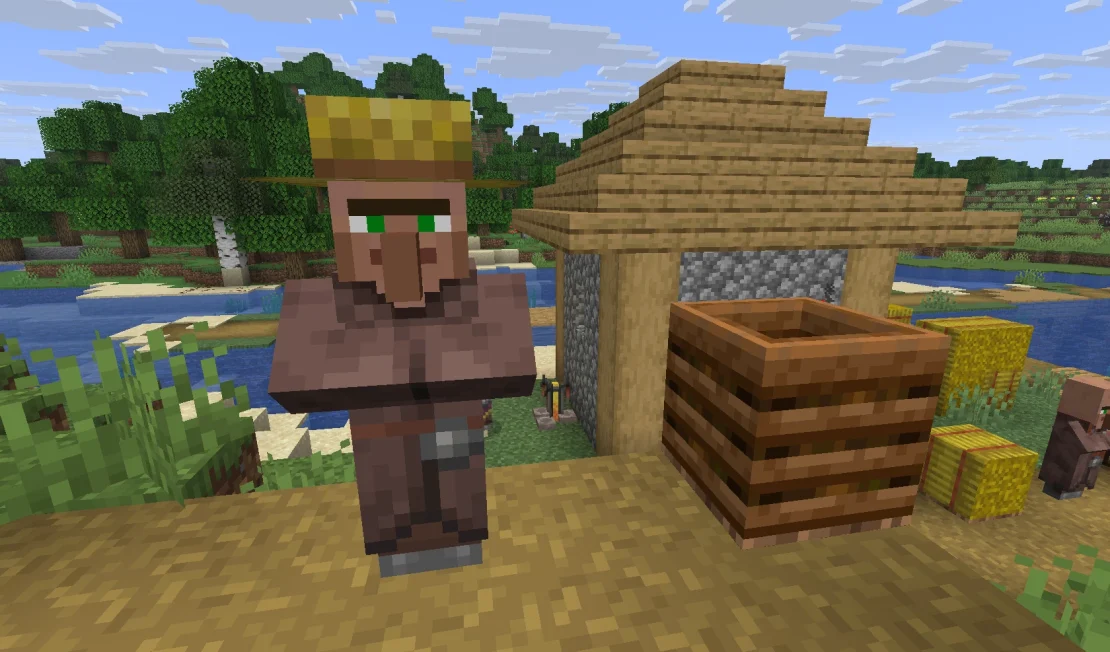
Farmer specializes in trading food and allows players to earn emeralds quickly by selling crops such as potatoes, carrots, or beetroots. At higher levels, he offers various prepared foods like golden carrots or cakes, making him one of the most important sources of nourishment in the game. His job site block is the Composter, where players can convert surplus plants into bone meal.
Farmer Trades
Novice:
- Wheat / Potato / Carrot / Beetroot → Emerald
- Emerald → Bread
Apprentice:
- Emerald → Pumpkin Pie / Apple
- Pumpkin→ Emerald
Journeyman:
- Melon → Emerald
- Emerald → Cookie
Expert:
- Emerald → Suspicious Stew / Cake
Master:
- Emerald → Golden Carrot / Glistering Melon Slice
Fisherman
- Job Block: Barrel
Fisherman specializes in trading fish and fishing-related items. Through his trades, players can obtain cooked fish or upgraded fishing equipment, which makes collecting food and enchanted items from the water much easier. His job site block is the Barrel, which functions as a compact storage container.

Fisherman Trades
Novice:
- String / Coal → Emerald
- Emerald + Raw Cod→ Cooked Cod
- Emerald → Bucket of Cod
Apprentice:
- Raw Cod→ Emerald
- Emerald + Raw Salmon → Cooked Salmon
- Emerald → Campfire
Journeyman:
- Raw Salmon → Emerald
- Emerald → Enchanted Fishing Rod
Expert:
- Tropical Fish → Emerald
Master:
- Boat / Pufferfish → Emerald
Fletcher
- Job Block: Fletching Table
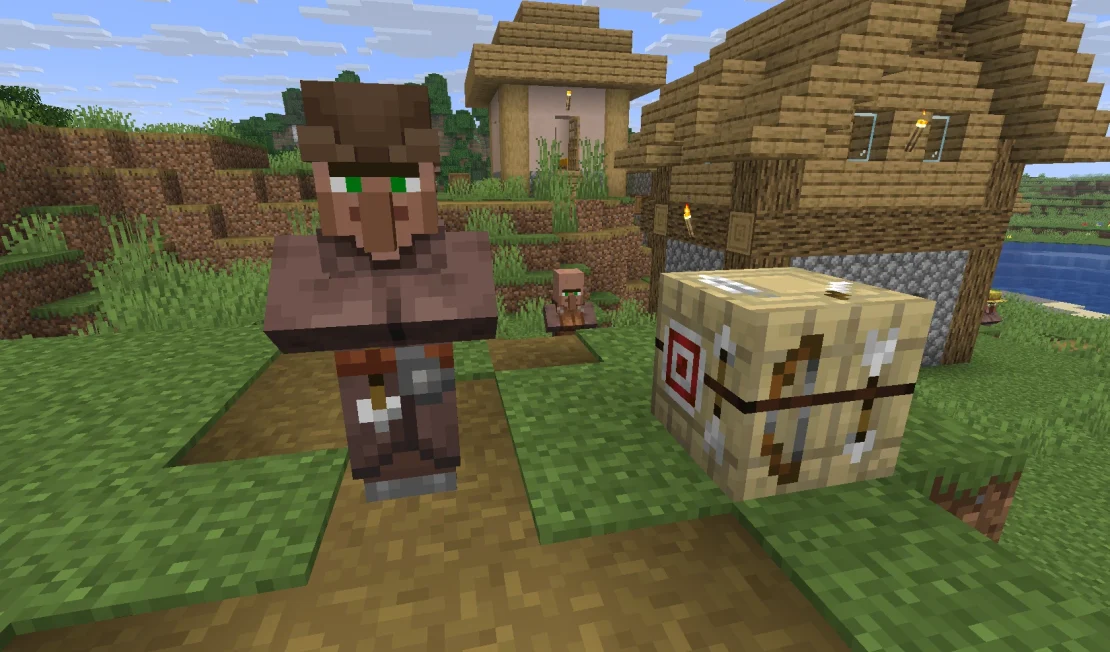
Fletcher specializes in trading items related to archery. At higher levels, he offers upgraded bows, crossbows, and special types of arrows, making him excellent support for players who prefer long-range combat. His job site block is the Fletching Table, which currently has no functional use and serves only as a workstation for assigning the villager’s profession.
Fletcher Trades:
Novice:
- Stick → Emerald
- Emerald → Arrow
- Emerald + Gravel → Flint
Apprentice:
- Flint → Emerald
- Emerald → Bow
Journeyman:
- String → Emerald
- Emerald → Crossbow
Expert:
- Emerald → Enchanted Bow
- Feather → Emerald
Master:
- Emerald + Arrow → Tipped Arrow
- Emerald → Enchanted Crossbow
- Tripwire Hook → Emerald
Leatherworker
- Job Block: Cauldron
Leatherworker specializes in trading leather items, and through his offers players can obtain leather armor pieces, saddles, and leather horse armor. His job site block is the Cauldron, which can hold water, lava, or powder snow, allowing players to use it for filling buckets or cauldrons as needed.

Leatherworker Trades
Novice:
- Leather → Emerald
- Emerald → Leather Pants / Leather Tunic
Apprentice:
- Flint → Emerald
- Emerald → Leather Boots / Leather Cap
Journeyman:
- Rabbit Hide → Emerald
- Emerald → Leather Tunic
Expert:
- Scute → Emerald
- Emerald → Leather Horse Armor
Master:
- Emerald → Saddle / Leather Cap
Librarian
- Job Block: Lectern
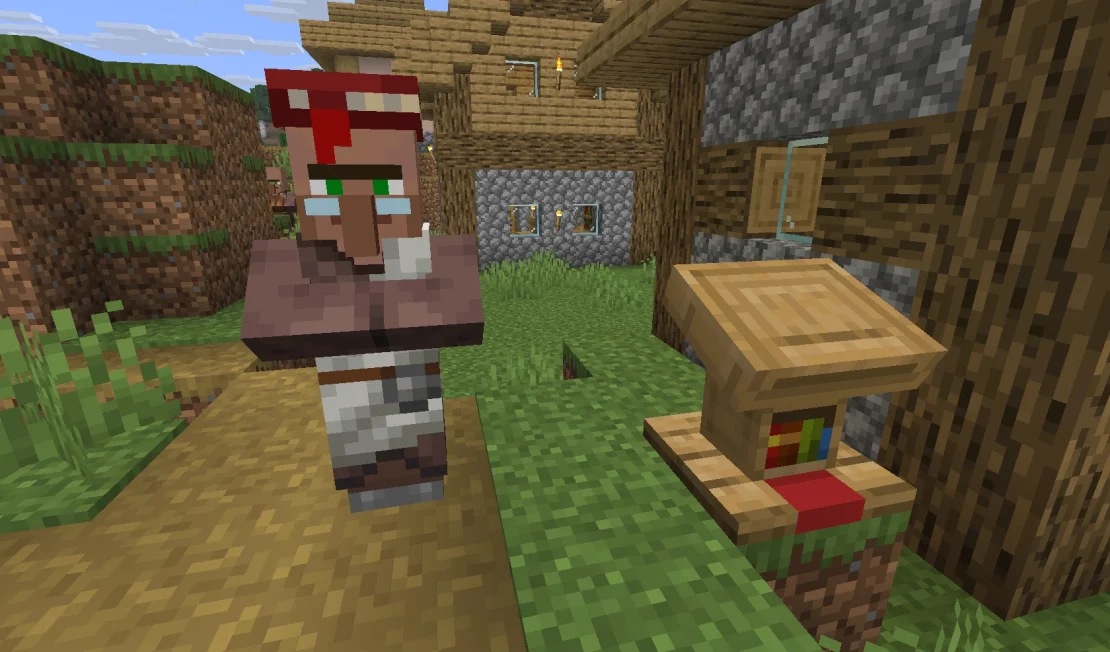
Librarian specializes in trading books, enchanted books, and other items related to knowledge and magic, making him one of the most valuable villagers in the game. He is the main source of powerful enchantments such as Mending and Unbreaking, which significantly improve gameplay and equipment durability. His job site block is the Lectern, which allows players to read books and serves as the workstation that assigns his profession.
Librarian Trades
Novice:
- Paper → Emerald
- Emerald + Book → Enchanted Book
- Emerald → Bookshelf
Apprentice:
- Emerald + Book → Enchanted Book
- Emerald → Lantern
- Book → Emerald
Journeyman:
- Ink Sac → Emerald
- Emerald + Book → Enchanted Book
- Emerald → Glass
Expert:
- Emerald + Book → Enchanted Book
- Emerald → Clock / Compass
- Book and Quill → Emerald
Master:
- Emerald → Name Tag
Stone Mason
- Job Block: Stonecutter
Stone Mason specializes in trading various types of stone and decorative blocks, making him very useful when building aesthetic structures. Through his trades, players can purchase different decorative stone variants as well as several types of terracotta and glazed terracotta. His job site block is the Stonecutter, which allows players to precisely shape stone and create specific block variants without wasting materials.
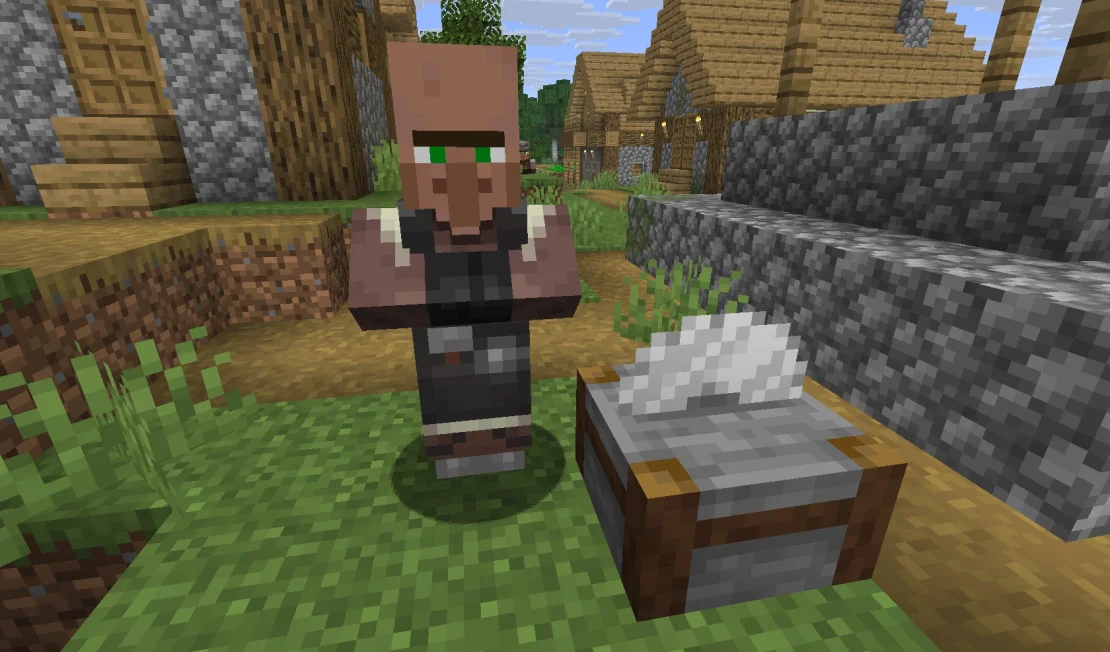
Stone Mason Trades:
Novice:
- Clay Ball → Emerald
- Emerald → Brick
Apprentice:
- Stone → Emerald
- Emerald → Chiseled Stone Bricks
Journeyman:
- Emerald → Polished Andesite / Polished Granite / Polished Diorite / Dripstone Block
- Granite / Andesite / Diorite → Emerald
Expert:
- Emerald → Terracotta / Glazed Terracotta
- Nether Quartz → Emerald
Master:
- Emerald → Quartz Pillar / Block of Quartz
Shepherd
- Job Block: Loom
Shepherd specializes in trading wool, dyes, and decorative items. He is especially useful if you plan to create colorful decorations, banners, or beds, because his trades include a wide variety of wool-based items, allowing you to avoid keeping large numbers of sheep in a pen. His job site block is the Loom, where players can create different patterns for banners.
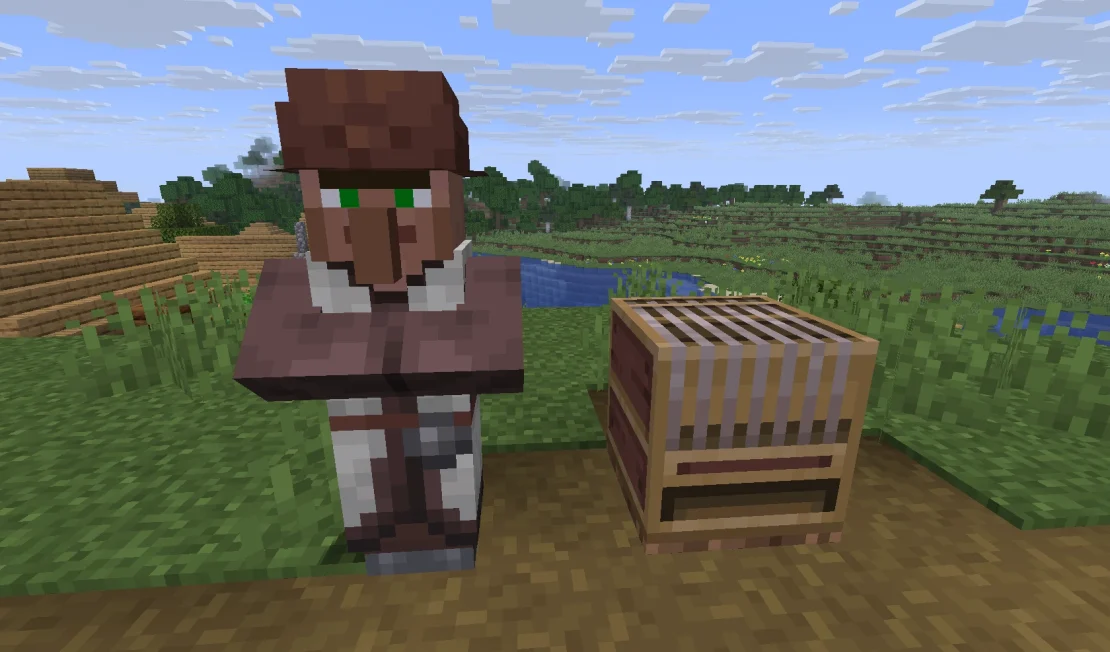
Shepherd Trades
Novice:
- White Wool / Brown Wool / Black Wool / Gray Wool → Emerald
- Emerald → Shears
Apprentice:
- Emerald → Wool
- Emerald → Carpet
- Black Dye / Gray Dye / Lime Dye / Light Blue Dye / White Dye → Emerald
Journeyman:
- Red Dye / Light Gray Dye / Pink Dye / Yellow Dye / Orange Dye → Emerald
- Emerald → Bed
Expert:
- Green Dye / Brown Dye / Blue Dye / Purple Dye / Cyan Dye / Magenta Dye → Emerald
- Emerald → Banner
Master:
- Emerald → Painting
Toolsmith
- Job Block: Smithing Table
Toolsmith trades tools ranging from basic stone items to high-quality diamond equipment, making him important for players who want to obtain good gear quickly. At higher levels, he offers upgraded tools with random enchantments, which saves a lot of time otherwise spent searching for the perfect enchanted books. His job site block is the Smithing Table, which players can use to upgrade their equipment to Netherite.

Toolsmith Trades
Novice:
- Coal → Emerald
- Emerald → Stone Axe / Stone Shovel / Stone Pickaxe / Stone Hoe
Apprentice:
- Iron Ingot → Emerald
- Emerald → Bell
Journeyman:
- Emerald → Enchanted Iron Axe / Enchanted Iron Shovel / Enchanted Iron Pickaxe / Diamond Hoe
- Flint → Emerald
Expert:
- Emerald → Enchanted Diamond Axe / Enchanted Diamond Shovel
- Diamond → Emerald
Master:
- Emerald → Enchanted Diamond Pickaxe
Weaponsmith
- Job Block: Grindstone
Weaponsmith trades weapons, offering various types of swords and axes, including upgraded and enchanted versions. He is worth visiting if you want to obtain powerful combat gear without having to mine diamonds yourself. His job site block is the Grindstone, which allows players to repair items and remove unwanted enchantments.
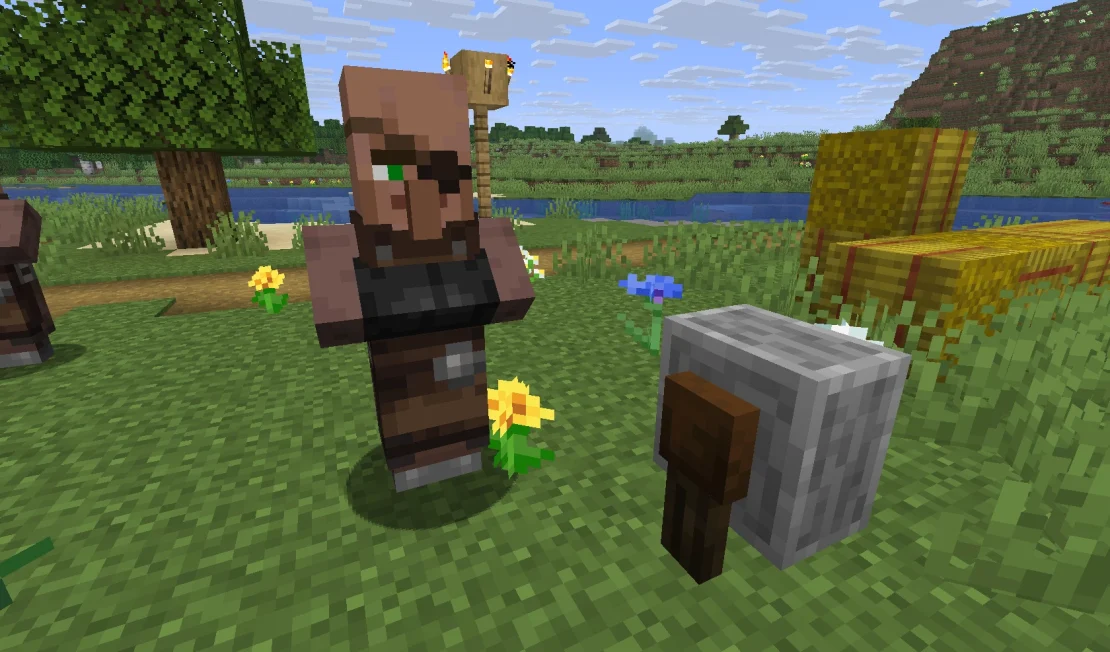
Weaponsmith Trades
Novice:
- Coal → Emerald
- Emerald → Iron Axe / Enchanted Iron Sword
Apprentice:
- Iron Ingot → Emerald
- Emerald → Bell
Journeyman:
- Flint → Emerald
Expert:
- Emerald → Enchanted Diamond Axe
- Diamond → Emerald
Master:
- Emerald → Enchanted Diamond Sword
Nitwit
Nitwit is the only type of villager that has no profession and cannot be assigned to any job site block. This means he does not trade, does not react to workstations, and does not level up. His role is purely decorative, as he behaves like a regular villager but provides no benefits to the player.
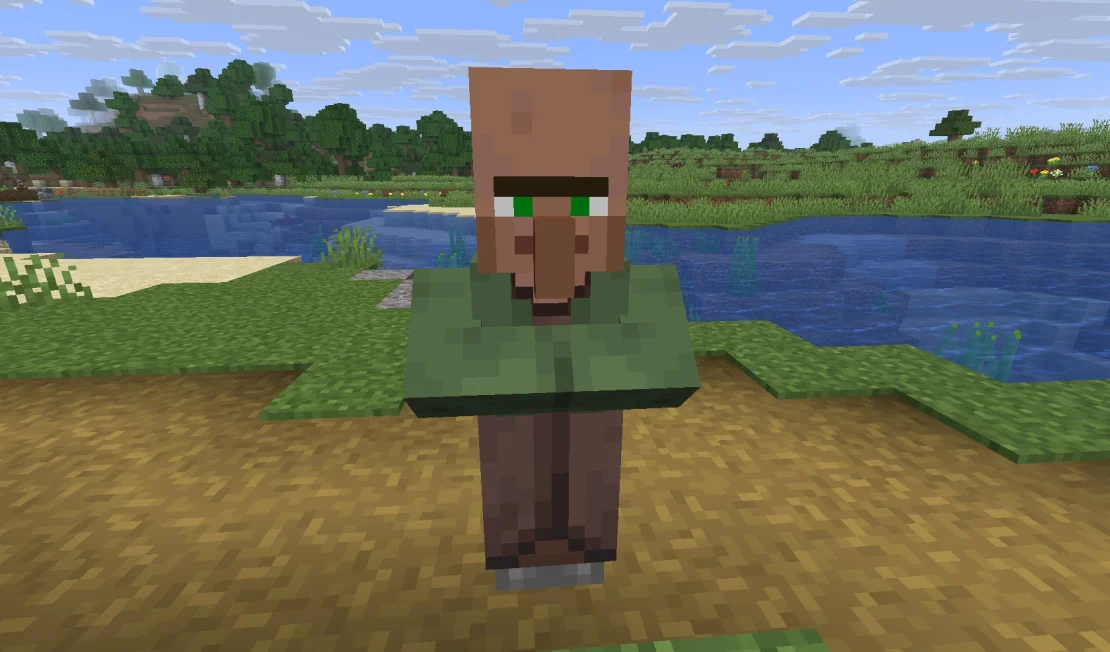
Unemployed
Unemployed villager is a regular village resident who has not yet been assigned a profession, but a job can be given to him by placing the appropriate job site block nearby. This villager will actively search for the closest available workstation and will automatically claim it, turning into a specialist. He does not offer any trades until he receives a profession, but he is very valuable to the player because he serves as a unit ready to take on any job you choose for him.

Frequently Asked Questions
How do I give a villager a profession?
To assign a profession to a villager, you need to place the correct job site block near an unemployed villager. The villager will automatically look for the nearest available workstation, and if it is accessible, they will walk to it and take the profession. It’s important not to confuse them with a Nitwit, because Nitwits can never work and will never claim a job. The workstation must also be reachable – obstacles like fences, water, walls, or closed doors can prevent the villager from getting to it and therefore stop them from becoming employed. And of course, the correct job site block must be used. Here is a list of all available job site blocks:
- Blast Furnace
- Smoker
- Cartography Table
- Brewing Stand
- Composter
- Barrel
- Fletching Table
- Cauldron
- Lectern
- Stonecutter
- Loom
- Smithing Table
- Grindstone
Why is my villager not taking a job?
A villager may refuse to take a profession for several reasons, and the most common one is that they already have a job and have gained some experience. This means they will not switch professions even if you destroy their previous workstation. Another common issue is a lack of access to the job site block – if the path is blocked by fences, water, walls, or other obstacles, the villager simply cannot reach it and therefore cannot take the profession.
The time of day also matters, because villagers only check and claim job site blocks in the morning and afternoon. For example, during the night, while sleeping, they do not interact with workstations at all. Problems may also occur when the workstation is placed too far away or when you are dealing with a Nitwit – these villagers are completely useless and can never take a profession.
How do I get more villagers in my village?
There are three main ways to increase the number of villagers in your village in Minecraft. The first and simplest method is breeding. To make villagers breed, you must meet two basic requirements: have enough free beds and provide them with food. Every new villager needs their own bed before the process can even begin. To increase their willingness to breed, give them bread, carrots, potatoes, or beetroot. When you see hearts above their heads, it means a baby villager will appear soon.
The second method is transporting villagers from another village, for example using a boat or minecarts. Once you bring them into your base and give them beds, they will automatically become part of your village.
The final method is curing zombie villagers. To do this, throw a splash potion of Weakness at the zombie villager and then feed it a golden apple. After the transformation, you’ll receive a fully cured villager who offers huge trading discounts and can take any profession you choose.
Why is my villager not restocking trades?
Traders may not restock their offers for several reasons, and the most common one is a lack of access to their job site block. Each villager must physically walk to their workstation in order to refresh their trades. Another reason may be the time of day, because villagers only restock in the morning and afternoon; they never restock at night, during rain, or while they are asleep.
How do I change a villager’s profession?
To change a villager’s profession, you first need to remove their current job site block. Once the workstation is destroyed, the villager will lose their profession and start looking for a new job site block. However, this only works if the villager has not gained any experience in their current profession. If they already have at least one level (Apprentice or higher), they will never change their profession, even if the block is removed.
After destroying the old workstation, simply place a new one nearby, giving the unemployed villager a chance to walk to it and take the new profession.
How do I protect my villagers from zombies?
Villagers are very vulnerable to zombie attacks, so it’s important to protect your village properly. The most important form of defense is good lighting, because zombies spawn in darkness. Place plenty of torches, lamps or glowstone around the entire village, especially near houses and open areas. Another effective solution is surrounding the village with a fence or wall to prevent zombies from getting inside.
A great additional layer of protection is building an Iron Golem, which will automatically patrol the area and eliminate any threats. You can create one yourself using iron blocks, or wait for it to spawn naturally if the village has a large enough population. It’s also important to ensure that all houses have proper doors – zombies can break wooden doors on higher difficulty levels, so villagers need to be safely secured inside during the night.
What are the different villager trade levels?
In Minecraft, there are five villager experience levels, which unlock progressively as you trade with them. As their level increases, they offer better and more valuable items, and the badge color on their clothing changes with each promotion. Here are the five available levels:
- Novice – the simplest and cheapest trades
- Apprentice – the first improved and slightly better offers
- Journeyman – higher-quality items, often useful in the mid-game
- Expert – rare and more expensive trades that can be very profitable
- Master – the final level, where the villager offers their best items, usually high-value weapons, tools, or enchantments
Who can I trade with if I don’t have any villagers?
If there’s no one in your village to trade with, your alternative is the Wandering Trader. He appears randomly near the player and offers a variety of items, although his trades are not as good as those of regular villagers and the selection is very limited. However, he can provide access to unique decorative blocks, rare plants, or items that do not naturally generate in your biome. Keep in mind that the Wandering Trader has no experience levels and does not upgrade his offers, so his trades will never improve over time.